🧠 Mappa mentale e percorso di studio
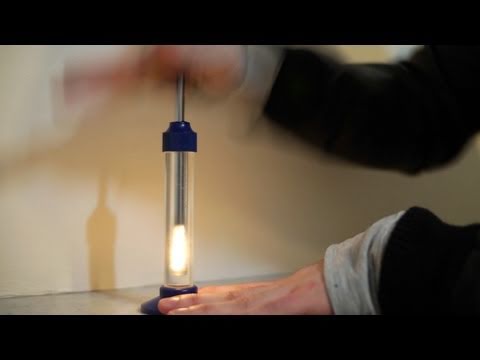
In natura quasi tutte le trasformazioni termodinamiche sono irreversibili: il caffè si raffredda, il gas di una bomboletta si espande aprendo la valvola, un blocco rovente tuffato in acqua porta tutto all’equilibrio. In questi casi il gas passa attraverso stati che non sono di equilibrio e non ha senso disegnare una curva nel piano -. Eppure la conservazione dell’energia funziona sempre: basta conoscere lo stato iniziale A e lo stato finale B, senza preoccuparsi del percorso. Questo capitolo mostra come il primo principio, letto come bilancio energetico con i diagrammi a bolle, risolva una grande varietà di problemi irreversibili.
Sezioni
- Trasformazioni irreversibili
- Il primo principio come bilancio energetico
- Diagramma di scambio energetico
- Tre problemi tipici
- Equilibrio termico: solido + gas
- Riscaldamento a pressione costante: il coefficiente Cp
- Problemi misti: pistoni, molle, gravità
Riflessioni
Esercizi
In nature almost all thermodynamic transformations are irreversible: coffee cools down, the gas in an aerosol can expands when the valve is opened, a red-hot block dropped into water brings everything to equilibrium. In these cases the gas passes through states that are not equilibrium states, and it makes no sense to draw a curve in the - plane. And yet conservation of energy always works: it is enough to know the initial state A and the final state B, without worrying about the path. This chapter shows how the first law, read as an energy balance with bubble diagrams, solves a wide variety of irreversible problems.
Sections
- Irreversible transformations
- The first law as an energy balance
- Energy exchange diagram
- Three typical problems
- Thermal equilibrium: solid + gas
- Heating at constant pressure: the Cp coefficient
- Mixed problems: pistons, springs, gravity
Reflections
Exercises
In natura quasi tutte le trasformazioni termodinamiche sono irreversibili. Alcuni esempi quotidiani: il caffè si raffredda nell’aria, il gas di una bomboletta si espande liberamente aprendo la valvola, un blocco di ferro rovente tuffato in acqua porta tutto all’equilibrio termico. Sono processi che avvengono spontaneamente in un verso solo: non abbiamo mai visto un caffè freddo riscaldarsi da solo raffreddando la stanza.
Idea chiave — Cosa rende una trasformazione irreversibile
Durante una trasformazione irreversibile il sistema (gas, liquido o solido) passa attraverso stati che non sono di equilibrio. Non ha senso parlare di una “curva” nel diagramma -, perché e non sono nemmeno ben definiti mentre la trasformazione è in corso: durante un’espansione libera, per esempio, le particelle in prima linea invadono il vuoto prima di quelle dietro, e la pressione non ha un unico valore in tutto il recipiente.
Perché non ci scoraggiamo. Il punto centrale del capitolo è che la conservazione dell’energia funziona sempre, anche quando la trasformazione è brusca, esplosiva o mal definita. Non serve seguire il percorso: bastano lo stato iniziale A e lo stato finale B, entrambi stati di equilibrio ben definiti. Fra A e B possiamo applicare esattamente il metodo già visto in meccanica: diagrammi di scambio energetico e bilanci di energia.
Questa è una distinzione concettuale importante. Un’isoterma reversibile e un’espansione libera possono portare il gas dagli stessi stati iniziale e finale (per esempio stesso , volume raddoppiato), ma cambiano l’universo in modo completamente diverso: nella prima il gas scambia calore e lavoro con l’ambiente, nella seconda no. Il primo principio da solo non distingue le due: per capire quale si può invertire e quale no servirà una grandezza nuova, l’entropia, introdotta nel capitolo successivo.
Collegamenti
Argomenti: Termodinamica Concetti: Trasformazioni termodinamiche · Primo principio della termodinamica Oggetti: Gas ideale
Esercizi collegati: Stessa temperatura, calore diverso · Vero o falso su trasformazioni · Espansione libera di un gas
In nature almost all thermodynamic transformations are irreversible. Some everyday examples: coffee cools down in the air, gas from a spray can expands freely when the valve is opened, a red-hot block of iron plunged into water brings everything to thermal equilibrium. These are processes that occur spontaneously in one direction only: we have never seen cold coffee heat itself up by cooling the room.
Key idea — What makes a transformation irreversible
During an irreversible transformation the system (gas, liquid or solid) passes through states that are not equilibrium states. It makes no sense to speak of a “curve” in the - diagram, because and are not even well defined while the transformation is under way: during a free expansion, for instance, the particles at the front invade the vacuum before those behind them, and pressure does not have a single value throughout the container.
Why this isn’t discouraging. The central point of the chapter is that conservation of energy always works, even when the transformation is abrupt, explosive or ill-defined. There is no need to follow the path: the initial state A and the final state B are enough, both being well-defined equilibrium states. Between A and B we can apply exactly the method already seen in mechanics: energy exchange diagrams and energy balances.
This is an important conceptual distinction. A reversible isotherm and a free expansion can take the gas between the same initial and final states (for example same , doubled volume), but they change the universe in completely different ways: in the first the gas exchanges heat and work with the surroundings, in the second it does not. The first law alone does not distinguish the two: to understand which can be reversed and which cannot will require a new quantity, entropy, introduced in the next chapter.
Connections
Topics: Thermodynamics Concepts: Thermodynamic transformations · First law of thermodynamics Objects: Ideal gas
Related exercises: Same temperature, different heat · True or false on transformations · Free expansion of a gas
Al termine del capitolo precedente abbiamo scritto il bilancio energetico di un gas. In forma completa:
dove ciascun termine ha un significato preciso:
- è l’energia interna del gas ideale ( = gradi di libertà: monoatomico, biatomico);
- è il calore ricevuto dal gas (positivo se entra nel gas);
- è il lavoro fatto dal gas sul pistone (o su altri oggetti meccanici);
- è il lavoro fatto dall’atmosfera sul gas.
Formula chiave — Primo principio
Valido per qualsiasi trasformazione, reversibile o irreversibile.
La forma con e separati è comoda nei problemi con pistone: tiene conto del fatto che, mentre il gas si espande, l’atmosfera viene compressa e quindi compie lavoro sul gas. Nella forma compatta che si trova spesso sui libri, , il simbolo è il lavoro netto fatto dal gas sull’ambiente esterno (atmosfera inclusa).
Cosa NON richiede la reversibilità
Il primo principio e la conservazione dell’energia valgono sempre. Non importa se la trasformazione è lenta o brusca, equilibrata o esplosiva: l’energia totale si conserva comunque. Quello che serve è solo conoscere con precisione lo stato iniziale e lo stato finale. È esattamente questo che rende il metodo del bilancio energetico così potente per le trasformazioni irreversibili, dove non esiste un percorso ben definito.
Collegamenti
Argomenti: Termodinamica Concetti: Primo principio della termodinamica · Energia interna · Legge dei gas perfetti Oggetti: Gas ideale · Pistone e cilindro
Esercizi collegati: Riscaldamento sotto il pistone · Azoto riscaldato in un cilindro rigido · Calore come sostanza?
At the end of the previous chapter we wrote the energy balance of a gas. In full form:
where each term has a precise meaning:
- is the internal energy of the ideal gas ( = degrees of freedom: monatomic, diatomic);
- is the heat received by the gas (positive if it enters the gas);
- is the work done by the gas on the piston (or on other mechanical objects);
- is the work done by the atmosphere on the gas.
Key formula — First law
Valid for any transformation, reversible or irreversible.
The form with and separated is convenient in piston problems: it accounts for the fact that, while the gas expands, the atmosphere is compressed and therefore does work on the gas. In the compact form often found in textbooks, , the symbol is the net work done by the gas on the surroundings (atmosphere included).
What reversibility is NOT required for
The first law and conservation of energy hold always. It does not matter whether the transformation is slow or abrupt, balanced or explosive: total energy is conserved regardless. All that is needed is precise knowledge of the initial state and the final state. This is exactly what makes the energy-balance method so powerful for irreversible transformations, where no well-defined path exists.
Connections
Topics: Thermodynamics Concepts: First law of thermodynamics · Internal energy · Ideal gas law Objects: Ideal gas · Piston and cylinder
Related exercises: Heating under the piston · Nitrogen heated in a rigid cylinder · Heat as a substance?
Come nei problemi meccanici, ogni problema termodinamico può essere rappresentato con un diagramma a bolle: una bolla per ogni tipo di energia, con il valore iniziale (stato A) e finale (stato B) scritti dentro, e frecce che indicano i trasferimenti.
Bolla = tipo di energia. Freccia = trasferimento.
Nel caso termodinamico le bolle tipiche sono: l’energia interna del gas , l’energia termica di un eventuale secondo corpo o termostato , l’energia dell’atmosfera e l’energia meccanica di pesi o macchine. Le frecce sono i tre scambi del primo principio: il calore verso un termostato, il lavoro verso parti meccaniche, il lavoro verso l’atmosfera.
Diagramma di scambio per un problema termodinamico. Il gas scambia calore con il termostato, lavoro con parti meccaniche (pesi, macchine) e lavoro con l’atmosfera. L’energia totale del sistema si conserva.
Il vantaggio del diagramma è lo stesso della meccanica: rende visibile a colpo d’occhio quali scambi sono presenti e quali sono nulli. Nei tre problemi tipici che seguono, la strategia è sempre azzerare le frecce che non ci sono (per esempio a volume costante, in un contenitore isolato) e lasciare solo i termini rilevanti.
Collegamenti
Argomenti: Termodinamica Concetti: Primo principio della termodinamica · Energia interna Competenze: Bilancio energetico a bolle Metodi: Diagramma a bolle di scambio energetico Oggetti: Gas ideale
Esercizi collegati: Azoto riscaldato in un cilindro rigido · Riscaldamento sotto il pistone · Calore come sostanza?
As with mechanics problems, every thermodynamics problem can be represented with a bubble diagram: one bubble for each type of energy, with the initial (state A) and final (state B) values written inside, and arrows indicating the transfers.
Bubble = type of energy. Arrow = transfer.
In the thermodynamic case the typical bubbles are: the internal energy of the gas , the thermal energy of any second body or thermostat , the energy of the atmosphere and the mechanical energy of weights or machines. The arrows are the three exchanges of the first law: heat to a thermostat, work to mechanical parts, work to the atmosphere.
Exchange diagram for a thermodynamics problem. The gas exchanges heat with the thermostat, work with mechanical parts (weights, machines) and work with the atmosphere. The total energy of the system is conserved.
The advantage of the diagram is the same as in mechanics: it makes visible at a glance which exchanges are present and which are zero. In the three typical problems that follow, the strategy is always to zero out the arrows that are absent (for example at constant volume, in an insulated container) and keep only the relevant terms.
Connections
Topics: Thermodynamics Concepts: First law of thermodynamics · Internal energy Skills: Energy bubble diagram Methods: Energy exchange bubble diagram Objects: Ideal gas
Related exercises: Nitrogen heated in a rigid cylinder · Heating under the piston · Heat as a substance?
Mettendo a contatto due corpi a temperature diverse, questi raggiungono l’equilibrio termico: il calore fluisce spontaneamente dal caldo al freddo finché le temperature si pareggiano. Se il contenitore è isolato e rigido, il problema si risolve con la sola conservazione dell’energia.
Consideriamo un blocco di metallo immerso in un cilindro rigido contenente un gas, il tutto isolato termicamente. Poiché il contenitore è isolato () e rigido (), l’energia interna totale del sistema (blocco + gas) si conserva. Il calore ceduto dal corpo caldo è esattamente il calore assorbito dal corpo freddo:
Da questa singola equazione si ricava la temperatura di equilibrio .
Le due forme dell'energia termica
- Solidi e liquidi: (con in kelvin, = calore specifico).
- Gas ideali: . In un contenitore isolato la loro somma resta costante.
La trasformazione è chiaramente irreversibile: il calore fluisce spontaneamente dal caldo al freddo, mai al contrario. Eppure l’energia si conserva perfettamente. È l’esempio più limpido del fatto che il primo principio permette molte trasformazioni che in natura vanno in un verso solo — è il secondo principio, non il primo, a stabilire il verso.
Il caso quantitativo (blocco di alluminio in azoto) è svolto in Blocco di alluminio in azoto.
Collegamenti
Argomenti: Termodinamica Concetti: Primo principio della termodinamica · Energia interna · Temperatura Competenze: Equazione calorimetrica Oggetti: Gas ideale · Calorimetro
Esercizi collegati: Azoto riscaldato in un cilindro rigido · Riscaldamento sotto il pistone · Calore come sostanza?
When two bodies at different temperatures are brought into contact, they reach thermal equilibrium: heat flows spontaneously from hot to cold until the temperatures equalise. If the container is isolated and rigid, the problem can be solved with energy conservation alone.
Consider a block of metal immersed in a rigid cylinder containing a gas, the whole thermally isolated. Since the container is isolated () and rigid (), the total internal energy of the system (block + gas) is conserved. The heat given up by the hot body is exactly the heat absorbed by the cold body:
From this single equation the equilibrium temperature can be found.
The two forms of thermal energy
- Solids and liquids: (with in kelvin, = specific heat).
- Ideal gases: . In an isolated container their sum stays constant.
The transformation is clearly irreversible: heat flows spontaneously from hot to cold, never the other way round. Yet energy is perfectly conserved. This is the clearest example of the fact that the first law allows many transformations that in nature only go one way — it is the second law, not the first, that fixes the direction.
The quantitative case (aluminium block in nitrogen) is worked out in Aluminium block in nitrogen.
Links
Topics: Thermodynamics Concepts: First law of thermodynamics · Internal energy · Temperature Skills: Calorimetric equation Objects: Ideal gas · Calorimeter
Related exercises: Nitrogen heated in a rigid cylinder · Heating under the piston · Heat as a substance?
Combinando il bilancio energetico con il lavoro dell’atmosfera si ricava un risultato importante: la capacità termica a pressione costante , e la sua relazione con quella a volume costante .
Principio — Calore specifico a pressione costante
Se un gas ideale viene riscaldato mantenendo la pressione costante (= atmosferica, grazie a un pistone libero), il calore necessario è con (relazione di Mayer).
Derivazione. A pressione costante la legge dei gas dà costante, quindi la dilatazione è
Il lavoro dell’atmosfera (che viene compressa) è
Sostituendo nel primo principio :
Isolando :
Riepilogo — Cv e Cp
: a pressione costante servono più joule perché una parte del calore va nel lavoro contro l’atmosfera, non nell’energia interna. La differenza è esattamente il lavoro molare compiuto per ogni kelvin di riscaldamento.
Collegamenti
Argomenti: Termodinamica Concetti: Primo principio della termodinamica · Trasformazioni termodinamiche · Calore specifico e capacità termica · Legge dei gas perfetti Competenze: Impostazione simbolica Oggetti: Gas ideale · Pistone e cilindro
Esercizi collegati: Problema — Ciclo rettangolare nel piano p-V · Stessa temperatura, calore diverso · Riscaldamento sotto il pistone
Combining the energy balance with the work of the atmosphere yields an important result: the heat capacity at constant pressure , and its relation to the one at constant volume .
Principle — Specific heat at constant pressure
If an ideal gas is heated while keeping the pressure constant (= atmospheric, thanks to a free piston), the heat required is with (Mayer’s relation).
Derivation. At constant pressure the gas law gives constant, so the expansion is
The work done by the atmosphere (which is compressed) is
Substituting into the first law :
Isolating :
Summary — Cv and Cp
: at constant pressure more joules are needed because part of the heat goes into work against the atmosphere, not into internal energy. The difference is exactly the molar work done for every kelvin of heating.
Links
Topics: Thermodynamics Concepts: First law of thermodynamics · Thermodynamic transformations · Specific heat and heat capacity · Ideal gas law Skills: Symbolic setup Objects: Ideal gas · Piston and cylinder
Related exercises: Problem — Rectangular cycle in the p-V plane · Same temperature, different heat · Heating under the piston
Nei problemi più generali il gas può spingere pesi, molle o altri corpi. In tutti i casi il primo principio è lo stesso: ogni forma di energia (cinetica di un peso, elastica di una molla, potenziale gravitazionale, termica di un secondo corpo) entra nel bilancio.
Lo schema tipico è un cilindro verticale con un pistone di massa e area . La pressione del gas è costante perché il pistone è in equilibrio meccanico istante per istante: al peso del pistone si aggiunge la spinta dell’atmosfera.
Quando il gas riceve calore e solleva il pistone di , il bilancio energetico del gas include tre “uscite” per il lavoro:
- il sollevamento del pistone: ;
- il lavoro contro l’atmosfera: ;
- l’aumento di energia interna del gas: .
Bilancio con pistone pesante
con il vincolo geometrico e l’equazione di stato .
Le due condizioni ausiliarie (vincolo geometrico ed equazione di stato) chiudono il sistema: permettono di legare , e e quindi di risolvere per l’incognita richiesta.
In questo capitolo abbiamo visto che la sola conservazione dell’energia (con il lavoro dell’atmosfera incluso) permette di risolvere una grande varietà di problemi termodinamici irreversibili: il gas si espande bruscamente, due corpi raggiungono l’equilibrio termico, il pistone si alza — tutto senza mai immaginare un percorso nel diagramma -. Ma restano domande che il primo principio non può risolvere: perché il calore fluisce sempre dal caldo al freddo? Quali trasformazioni sono invertibili? Per rispondere serve una grandezza nuova, l’entropia.
Un caso quantitativo (pistone verticale che si solleva) è svolto in Sollevamento di un pistone verticale.
Collegamenti
Argomenti: Termodinamica Concetti: Primo principio della termodinamica · Energia interna · Energia potenziale gravitazionale Competenze: Bilancio energetico a bolle Oggetti: Gas ideale · Pistone e cilindro
Esercizi collegati: Azoto riscaldato in un cilindro rigido · Sollevamento di un pistone verticale · Riscaldamento sotto il pistone
In more general problems the gas can push weights, springs or other bodies. In every case the first law is the same: every form of energy (kinetic energy of a weight, elastic energy of a spring, gravitational potential energy, thermal energy of a second body) enters the balance.
The typical set-up is a vertical cylinder with a piston of mass and area . The gas pressure is constant because the piston is in mechanical equilibrium at every instant: the weight of the piston adds to the push of the atmosphere.
When the gas receives heat and lifts the piston by , the energy balance of the gas includes three “outflows” for work:
- lifting the piston: ;
- work against the atmosphere: ;
- the increase in internal energy of the gas: .
Balance with a heavy piston
with the geometric constraint and the equation of state .
The two auxiliary conditions (geometric constraint and equation of state) close the system: they allow , and to be linked and hence the required unknown to be solved for.
In this chapter we have seen that energy conservation alone (with the work of the atmosphere included) allows a great variety of irreversible thermodynamic problems to be solved: the gas expands abruptly, two bodies reach thermal equilibrium, the piston rises — all without ever imagining a path on the - diagram. But questions remain that the first law cannot answer: why does heat always flow from hot to cold? Which transformations are reversible? To answer these a new quantity is needed, entropy.
A quantitative case (a vertical piston being lifted) is worked out in Lifting a vertical piston.
Links
Topics: Thermodynamics Concepts: First law of thermodynamics · Internal energy · Gravitational potential energy Skills: Bubble energy balance Objects: Ideal gas · Piston and cylinder
Related exercises: Nitrogen heated in a rigid cylinder · Lifting a vertical piston · Heating under the piston